



Facial nerve paralysis involves weakness or paralysis of the muscles on one side of the face, leading to drooping and difficulty in facial movement. Here are some common causes:
1. Bell’s Palsy
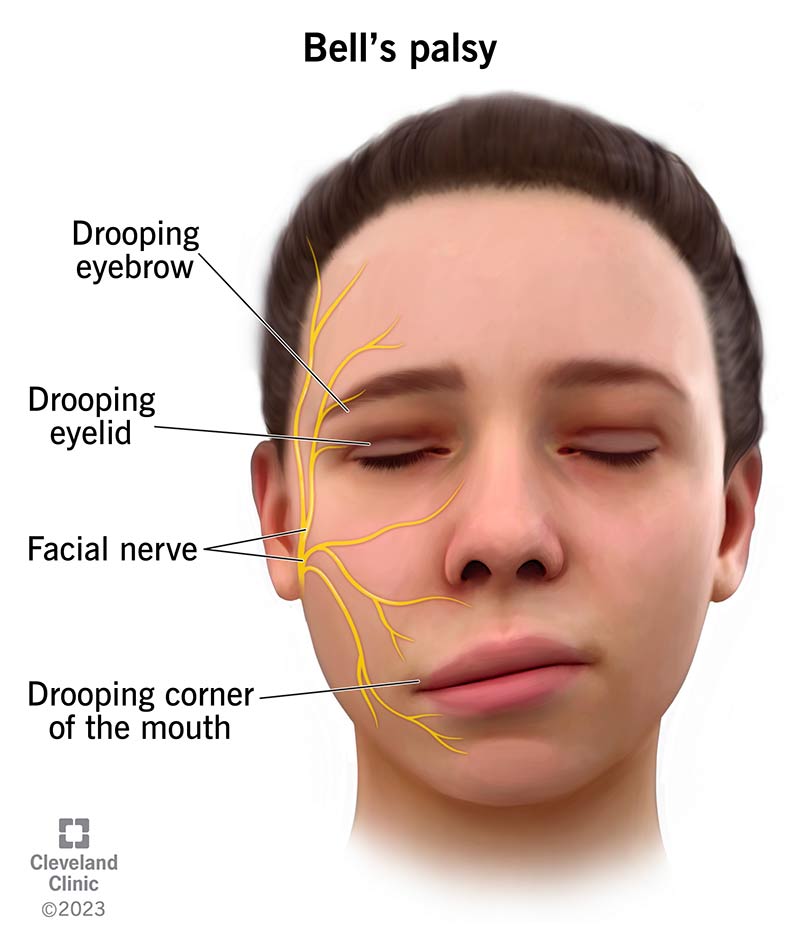
Bell’s Palsy, often linked to viral infections like herpes simplex, causes sudden paralysis on one side of the face, including symptoms like drooping eyelids and difficulty closing the eye.
2. Stroke
A stroke can lead to facial nerve paralysis when the blood supply to the brain is disrupted, affecting facial muscles. This may also be accompanied by weakness in other parts of the body.
3. Trauma
Injuries to the face or head, such as those from accidents or surgeries, can damage the facial nerve, resulting in paralysis.
4. Tumors
Both benign and malignant tumors in the brain, ear, or parotid gland can compress the facial nerve, causing paralysis.
5. Infections
Infections like Ramsay Hunt syndrome, caused by the varicella-zoster virus, can lead to facial nerve paralysis along with a painful rash.
6. Neurological Disorders
Conditions such as multiple sclerosis can affect the facial nerve, leading to paralysis as part of broader neurological symptoms.
7. Iatrogenic Causes
Iatrogenic facial nerve paralysis can occur as a complication of medical or surgical procedures, particularly during face-lift surgeries. However, at our clinic, we use advanced electric devices during face-lifts to minimize the risk of causing this type of paralysis.
Understanding the causes of facial nerve paralysis is crucial for proper diagnosis and management. If you notice any symptoms, it’s important to seek medical advice promptly.